
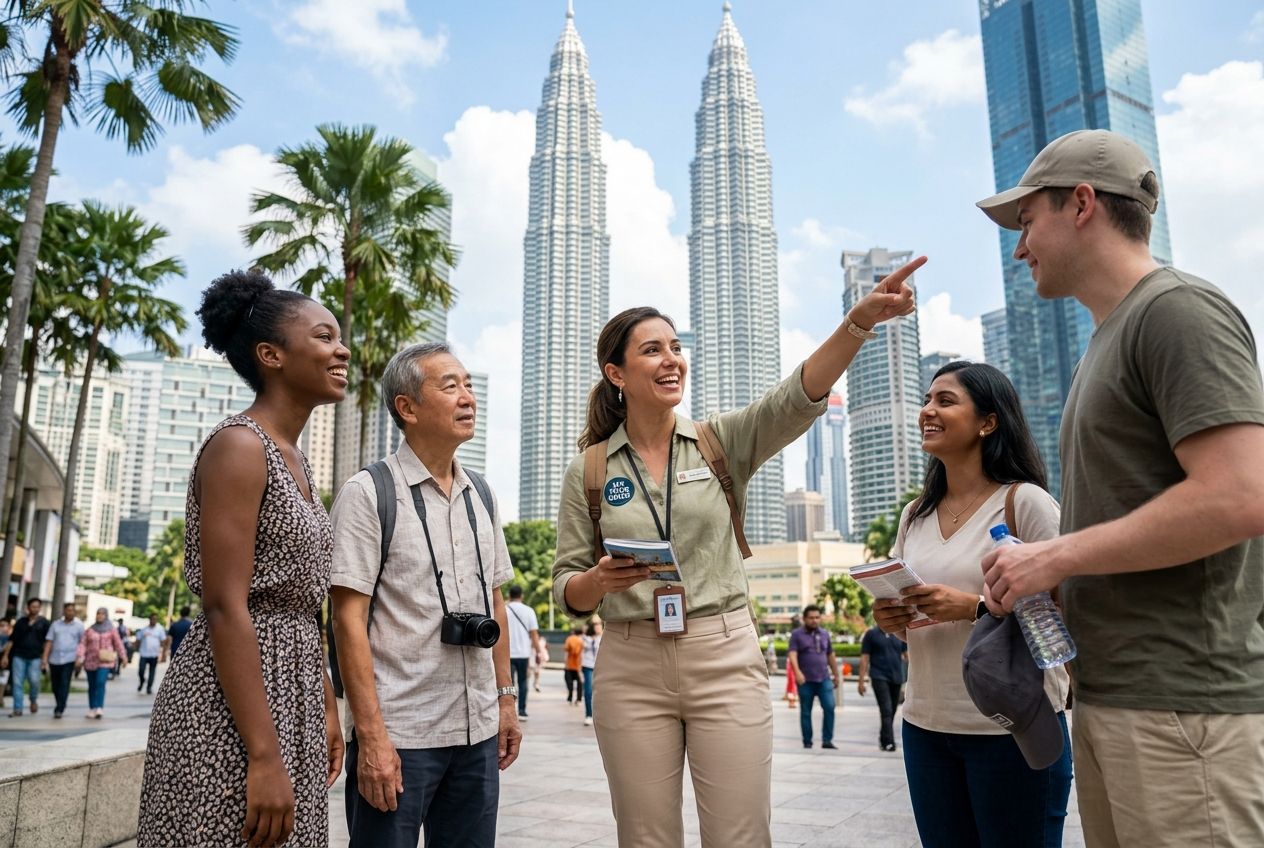
What if I told you that most travellers get Kuala Lumpur completely wrong?
They spend one night, snap a photo of the Petronas Twin Towers, and rush off to the islands. We think that’s a real shame.
Our team has run daily tours here since 2010, and we’ve watched thousands of visitors discover that the best things to do in Kuala Lumpur sit far beyond the guidebook basics. Think ancient Hindu temples tucked into limestone cliffs, and street markets where locals queue for breakfast.
The weather stays warm all year. The Grab app gets you anywhere cheaply, English is spoken everywhere, and the city feels genuinely safe.
So give this city two or three days. We’ll walk you through exactly where locals really go, step by step.
Key Takeaways
- Kuala Lumpur rewards visitors with three to five nights, offering everything from Batu Caves’ 272 steps to street food in Chinatown and Petronas Twin Towers views.
- Key attractions include the 452-metre Petronas Twin Towers, free KLCC Park fountain shows nightly, and free entry to the main Batu Caves temple, all reachable by cheap public transport.
- Skip overrated spots like Jalan Alor and Kwai Chai Hong. Explore the neighbourhoods where locals actually eat, including Imbi Market and the Indian community areas of Brickfields.
- Budget-friendly meals cost eight to fourteen ringgit at hawker stalls versus fifteen to twenty-five ringgit in tourist areas, with free attractions including Merdeka Square and the Forest Eco Park.
- Stay in central Bukit Bintang or Chinatown, use the Grab app for transport, and pack cotton clothing plus a rain jacket for the year-round humidity and afternoon downpours.
The Kuala Lumpur Essentials
Your first trip works best when you focus on the core kuala lumpur attractions that define the city. These essentials give you a real feel for what makes KL tick, without overwhelming your schedule.
- Grab a local SIM or e-SIM at the airport for instant internet access. Google Maps and the Grab app will become your best friends for getting around.
- Visit the Petronas Twin Towers during daylight hours to skip the crowds, then explore KLCC Park below for free views and open space.
- Head to Batu Caves early in the morning to beat the heat and the tourists. You’ll climb 272 steps to reach the massive limestone cavern.
- Explore Merdeka Square and the Colonial Quarter on foot, spotting the Sultan Abdul Samad Building and the historical architecture that shaped modern Malaysia.
- Ride the KTM, MRT, or LRT lines using Google Maps to plan your route. These metro systems cost very little and beat the traffic at peak times.
- Pack loose cotton and linen clothing, a rain jacket, an umbrella, and mosquito repellent. The tropical climate brings heat, humidity, and afternoon downpours year-round.
- Carry both cash and a debit card. Smaller traders in Petaling Street and Central Market prefer ringgit notes, though cards work fine at major shops and restaurants.
Petronas Twin Towers and KLCC
The Petronas Twin Towers stand 452 metres tall across 88 storeys, making them the tallest twin towers on Earth. These architectural giants held the title of world’s tallest buildings from 1998 to 2004, and Islamic design principles run through every detail.
The towers dominate Kuala Lumpur’s skyline, and visiting them ranks high on most first-time visitors’ lists for good reason. The connected Skybridge offers panoramic views across the city.
One thing catches many international visitors off guard: ticket prices are tiered by nationality. According to the official PETRONAS Twin Towers e-ticket portal, Malaysian citizens pay a discounted local rate, while non-Malaysian adults pay well over RM 100 for the Skybridge and Observation Deck combo. Buy your timed ticket directly through the official portal, since tickets sell out the same day and occasional promotional deals appear there first.
KLCC Park spreads out nearby as a peaceful green space where you can admire the towers without paying a thing. The park’s fountain show runs nightly at 8pm and 9:30pm, and it costs nothing to watch.
Night visits transform the towers into illuminated giants, so plan an evening trip for the most striking photographs.
Here’s what else sits within a short walk:
- The KLCC shopping mall right beside the towers, with a large food court for an easy lunch or dinner.
- Luxury hotels like the Mandarin Oriental and Banyan Tree, offering tower views from their rooms if your budget stretches that far.
- Sky51 Rooftop Bar at the EQ Hotel, with brilliant views of the Petronas Towers and a minimum spend of 100 RM per person.
You can explore the towers and KLCC independently without booking a tour, and many visitors do exactly that. The complex sits on the Ampang Park LRT line, so getting there by public transport is easy. Allow two to three hours if you want to visit the Skybridge, shop, eat, and soak in the atmosphere without rushing.
Batu Caves
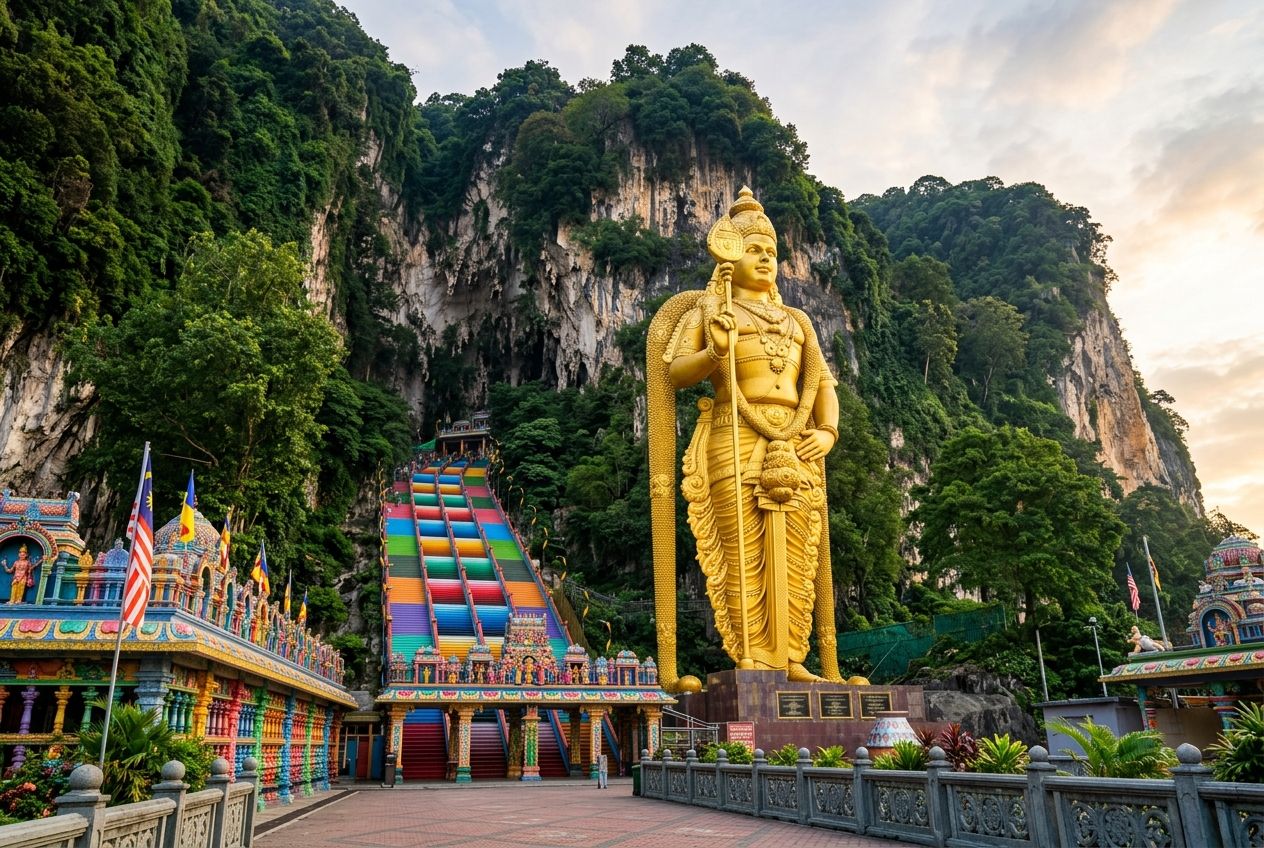
Batu Caves sits 13 km north of central Kuala Lumpur, roughly 30 to 45 minutes by car or a straightforward KTM Komuter ride from KL Sentral. You’ll climb 272 multicoloured steps to reach the main cave complex, passing beneath the striking 42.7 metre golden statue of Lord Murugan on the limestone cliff face.
Entry is completely free, though modest dress matters here. Remove your shoes when you step into the temple areas, and cover your shoulders and knees as a sign of respect. Small temples dot the cave system itself, creating pockets of spiritual activity throughout the complex.
Start your visit early, ideally before 9 am. Here’s why the early start pays off:
- Visitors arriving around 7 am typically finish the climb and reach the shrine areas in roughly half the time it takes mid-morning arrivals.
- The morning light hits those rainbow steps beautifully, and the cooler air makes the climb far more pleasant.
- You’ll face far fewer aggressive monkey encounters when fewer visitors crowd the steps with food and bags.
The monkeys roam the whole site, so keep your belongings close and avoid direct eye contact. They’re territorial and will snatch loose items without hesitation.
Our private Batu Caves combo tour and small-group Batu Caves combo tour pair the caves with other top attractions kuala lumpur visitors love, giving you a full day that flows logically across the city. If you’re visiting during Thaipusam, expect thousands of Hindu devotees performing prayer and religious ceremonies, transforming the entire area into a vibrant festival worth witnessing.
Merdeka Square and the Colonial Quarter
Merdeka Square sits at the centre of Kuala Lumpur’s colonial district, marking the exact spot where Malaysia declared independence from British rule on 31 August 1957. You’ll stand beneath a towering 312-foot flagpole, and the annual Independence Day parade still marches through this historic space with real ceremony.
The Sultan Abdul Samad Building rises nearby with its distinctive Moorish architecture and copper domes, and its gardens are open for you to explore at your own pace. This area gives you a genuine feel for how the city began, blending old colonial charm with modern Kuala Lumpur.
Walking through the colonial district reveals layers of history at every turn:
- The National Textile Museum sits close to Masjid Jamek, offering free exhibits on Malaysian textile traditions without spending a ringgit.
- The old railway station shows off its ornate design, and locals still play at the nearby cricket ground.
- The river confluence here actually gave the city its name.
- The KL City Gallery stands across from the National Textile Museum and features the famous “I LOVE KL” sign that travellers photograph constantly.
You can wander these streets for hours, soaking in the architecture and stopping at local cafes, without feeling rushed or crowded like you might at busier kl sightseeing spots.
KL Tower and the Forest Eco Park
KL Tower stands 421 metres tall and ranks as the seventh tallest telecommunications tower in the world. You’ll get sweeping panoramic views across the city from the top, but check the pricing carefully before you go.
Like the Petronas Towers, KL Tower uses nationality-tiered pricing. Per KL Tower’s official ticketing platform, non-Malaysian adults currently pay RM 140 for the Sky Terrace alone, or RM 180 for the Sky Terrace plus Observation Deck combo, while Malaysian citizens pay roughly RM 50 to RM 55. Knowing this upfront saves you an unwelcome surprise at the ticket counter, and booking online often unlocks small discounts.
The real bargain sits at the tower’s base. KL Forest Eco Park charges just RM 40 entry and opens from 8 am to 5:30 pm daily. This is genuine rainforest in the middle of the city, complete with a 200-metre canopy walk that takes 15 to 20 minutes to cross and suspension bridges linking different sections.
Visit on a cooler day if you can, since the humidity makes the walk more taxing than you’d expect.
KL Tower vs Petronas Twin Towers: Which View Wins?
| Factor | Petronas Twin Towers | KL Tower |
|---|---|---|
| View quality | Higher elevation, sharper city perspectives | Great views, and you can see the Petronas Towers themselves |
| Practicality | Timed tickets sell out fast | Combines easily with the Forest Eco Park next door |
| Best for | Pure sightseeing value | A full afternoon without backtracking across town |
The Eco Park’s design drew inspiration from the adjacent green space, which also influenced the architecture of Hotel Indigo On The Park. You’ll spot locals jogging the forest trails and families picnicking under the canopy, so this spot feels less touristy than most kl sightseeing destinations.
Bring water and wear trainers with grip. Skip this visit if rain has fallen recently, since the paths turn slippery fast.
Chinatown and Central Market
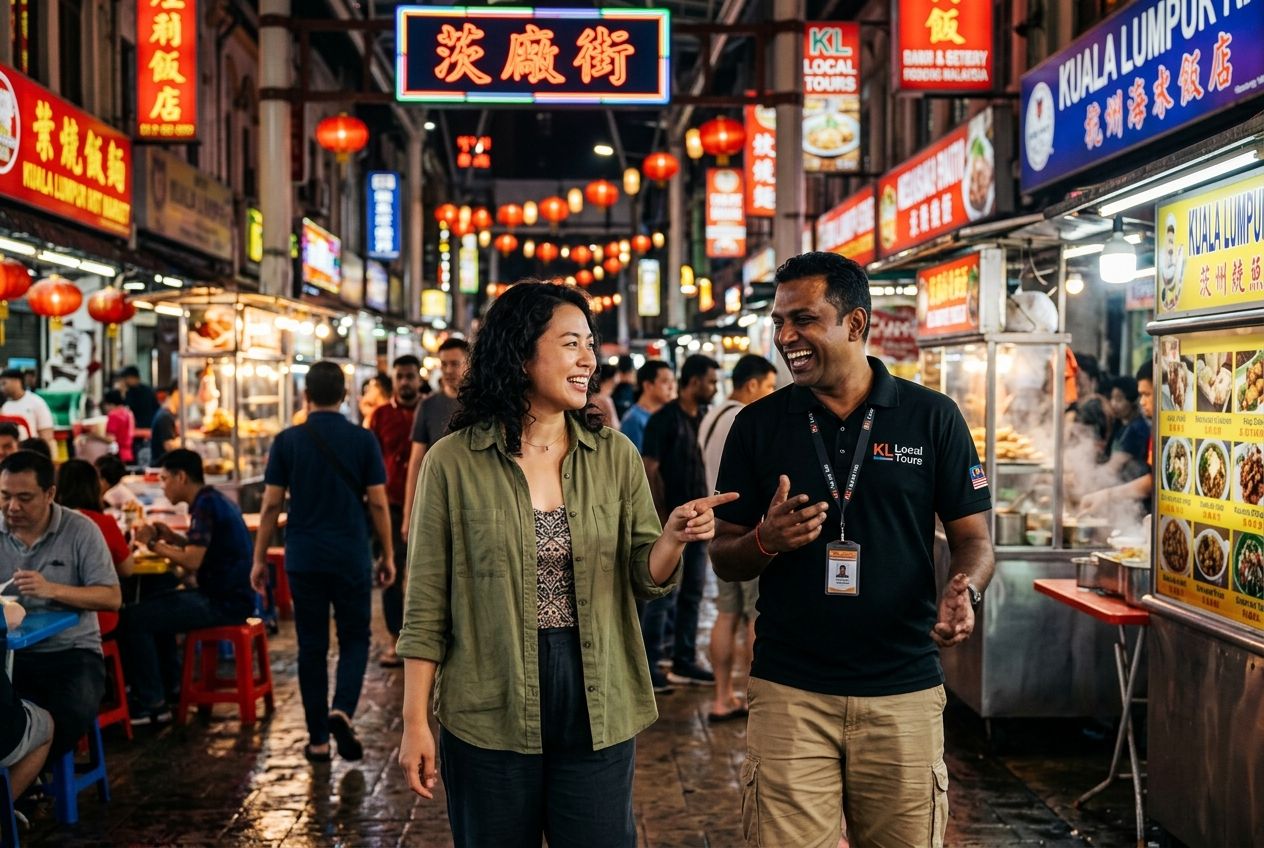
Chinatown pulses with life, and Petaling Street sits at its core. You’ll find designer knockoffs, quirky football shirts, and market stalls packed shoulder to shoulder. Local vendors sell ais mata kucing and apam balik, fresh fruit piled high on carts, and snacks that cost just a few ringgit.
The colonial architecture blends seamlessly with modern businesses, creating a visual feast that tells Kuala Lumpur’s story. Walking through costs nothing, and you absorb the energy of traders haggling, shoppers bargaining, and the smell of street food cooking.
Sri Mahamariamman Temple and Guan Di Temple anchor the spiritual side of Chinatown. Both are free to enter, and their intricate carvings and vibrant colours draw locals and visitors alike.
Central Market sits nearby as a heritage building, not merely a shopping stop. The structure itself holds history, with distinctive architecture reflecting the city’s past. You can wander through without spending money, simply appreciating the craftsmanship that shaped this neighbourhood for generations.
Places to Visit in Kuala Lumpur by Neighbourhood
Kuala Lumpur splits into distinct neighbourhoods, each with its own character. Your experience changes dramatically depending on where you spend your time.
- KLCC sits at the city’s centre, dominated by the Petronas Twin Towers and surrounding shopping malls. This area pulses with energy and offers world-class dining and retail. It works best if you want modern Malaysia and architectural landmarks. The Klang Valley MRT Line connects you directly to KLCC station.
- Bukit Bintang buzzes with activity day and night, packed with hotels, restaurants, and entertainment venues. The Jalan Alor street art runs through here, though locals know the food street itself is pricey and touristy. This zone suits visitors wanting nightlife, shopping, and the main tourist infrastructure. Bukit Bintang MRT station puts you right in the action.
- Chinatown throbs with history, temples, and street food stalls crammed into narrow lanes. Guandi Temple and Chan She Shu Yuen Clan Association Hall stand as spiritual anchors, and you’ll find heritage sites and affordable meals throughout. Pasar Seni LRT station serves this neighbourhood well.
- Brickfields, known as Little India, showcases Indian culture, spice shops, and exceptional cuisine. Sari shops, temples, and restaurants line the streets with genuine character, and the Indian food here ranks among the city’s best. Brickfields KTM Komuter station provides easy access.
- Bangsar combines residential charm with trendy cafes, galleries, and independent shops. It attracts expats and locals wanting a slower pace, with boutique hotels, local art, and neighbourhood restaurants. Bangsar LRT station connects you to the rest of the city.
Free Things to Do in Kuala Lumpur
Your money stretches further here than you might expect. We operate these routes weekly, so we know which free kuala lumpur attractions genuinely reward your time.
- Visit KLCC Park and catch the fountain show, which runs several times daily with the Petronas Twin Towers framing the water display perfectly.
- Explore the main Batu Caves temple at 7 am when it opens. It costs nothing to enter and feels far more spiritual without the crowds.
- Walk through Merdeka Square to see the colonial architecture and the historic flagpole where Malaysia declared independence.
- Stroll the Perdana Botanical Gardens, a sprawling public green space where tropical plants and peaceful pathways fill your afternoon.
- Hike the Forest Eco Park trails near KL Tower for shaded forest walks and city views.
- Wander the River of Life walk along the city’s waterfront, spotting local life and street art as you move between neighbourhoods.
Fancy a few more? These cost nothing too:
- Tour Masjid Negara, the National Mosque, outside prayer times to see intricate Islamic architecture and peaceful courtyards.
- Browse the National Textile Museum near Merdeka Square for free exhibits on Malaysian clothing history and traditional crafts.
- Visit Thean Hou Temple between 8 am and 8 pm with no entry charge. The ornate temple showcases Chinese religious traditions beautifully.
- Walk Chinatown and Central Market on foot to soak up the street energy, spot hawker stalls, and photograph colonial shophouses.
Where to Eat Like a Local
Kuala Lumpur’s best meals happen away from the tourist traps, where locals queue at hawker stalls serving authentic Malaysian food. You’ll eat better and spend less if you skip the shopping malls and head to the street markets instead.
Street Food and Local Markets

- Jalan Alor remains Kuala Lumpur’s most famous food street, though prices run higher than other hawker spots because tourists flock there. Grilled seafood, satay, and noodle dishes fill the stalls, but expect to pay 15-25 RM for meals that cost 8-12 RM elsewhere. Recent Tripadvisor visitor reviews back this up, describing the street as tourist-dominated and overpriced compared with nearby hawker centres, with few locals eating there. So it’s not just our opinion as operators.
- Lot 10 Hutong sits inside the Lot 10 shopping centre and offers air-conditioned hawker stalls without the street chaos. Traditional Malaysian dishes cost 10-18 RM per meal, a solid middle ground between street food and mall prices.
- Imbi Market operates as a wet market by day, then transforms into a food haven at night with stalls selling char kway teow, laksa, and grilled meats. Meals cost 8-14 RM, and locals genuinely eat here. Evening meals at Jalan Alor typically run nearly double what you’d pay at neighbourhood spots like this, and most traditional vendors here still work on a cash-only basis. That pattern holds across KL’s authentic hawker scene, where card readers stay rare and prices reflect what residents actually pay.
- Brickfields holds the largest Indian community in Kuala Lumpur, so you’ll find authentic roti canai, biryani, and curry dishes at 7-12 RM per plate. The area pulses with energy, especially around Jalan Tun Sambanthan.
- Taman Connaught’s market runs Wednesday nights with street food mostly catering to locals, not visitors chasing Instagram moments. Arrive hungry and bring cash, as most vendors avoid card payments.
- Kampung Baru Night Market operates from Saturday night through Sunday morning, serving traditional Malay food and handicrafts at genuine local prices. This market feeds residents, not tour groups, so quality stays high and costs stay low.
Cafes, Restaurants, and Something Different
- Din Tai Fung at Pavilions delivers exceptional xiao long bao with perfect meat-soup ratios, though mall food courts charge two to three times hawker prices. One order of dumplings costs 18-22 RM here versus 6-8 RM at street stalls.
- LaGula by The Hungry Tapir in Chinatown offers diverse vegan options including Madras platters and vegan seafood alternatives, with meals at 12-16 RM. It proves Malaysian food adapts brilliantly to different diets.
- Merchants Lane Cafe fuses local and Western dishes, with nasi lemak pancakes and sambal mayo chicken burgers drawing crowds. Meals run 14-20 RM, and the fusion works because each dish respects its roots.
- Tamarind Springs sits outside the city centre and serves Mekong sharing menus featuring green chicken and wild banana curry at 25-35 RM per person. The 30-40 minute journey is worth it for the authentic Southeast Asian flavours.
- The Old China Cafe specialises in Nyonya cuisine, a heritage blend of Chinese and Malay cooking traditions.
Kuala Lumpur After Dark
Kuala Lumpur transforms into a glittering playground once the sun dips below the horizon. You’ll find rooftop bars, night markets, and illuminated landmarks that reveal a completely different side of the city.
- Head to Sky51 Rooftop Bar at EQ Hotel for unobstructed views of the Petronas Towers lit up against the night sky. The venue requires a minimum spend of 100 RM per person and enforces a smart dress code. Order the devilled popcorn chicken as your bar bite while you take in the panorama.
- Catch the KLCC fountain show, which runs nightly and choreographs water jets to music and coloured lights. Each display lasts roughly 15 minutes, so arrive early to secure a good viewing spot along the promenade.
- Chase the illuminated skyline from rooftop venues across the city, particularly on clear nights. Hotel bars offer premium vantage points, though check the forecast before heading out.
- Explore Jalan Alor at night, where street food stalls fire up their grills and the lane buzzes with energy until late. The atmosphere crackles as locals and visitors mingle shoulder to shoulder.
- Wander through Petaling Street in Chinatown after dark, where night markets pulse with activity under bright signage. Street vendors sell everything from souvenirs to snacks.
- Step into The Concubine Bar in Chinatown for playful decor inspired by the neighbourhood’s heritage and Happy Hour cocktail specials. Their signature drink “Her Name is Rio” blends cachaca, elderflower, italicus, and apple cordial.
- Try PS150, a speakeasy bar in Chinatown serving cocktails inspired by regional flavours at premium prices. The intimate setting suits a sophisticated evening, and reservations help on busy nights.
- Book our KL evening tour to experience the city’s nocturnal highlights with a local guide who knows exactly where to go.
What Is Overrated in Kuala Lumpur
Several spots in KL get massive hype but don’t deliver. Here’s our honest take after fifteen years of running routes past them daily.
- Jalan Alor sits at the top of the list, packed with tourists hunting street food that costs more than it should. Locals rarely eat there anymore; prices shot up while quality stayed flat. Try Makan Kitchen instead for authentic flavour without the tourist markup.
- Kwai Chai Hong started as genuine street art, but commercialisation has buried the soul. Advertisements plaster every corner now, turning a local gem into a photo booth for Instagram.
- Central Market sells handicrafts at London prices, which tells you everything about where it sits on the value scale.
- Petaling Street Market pushes designer knockoffs as if they’re treasures, but most items lack authenticity and fall apart fast.
Better options exist across the city if you skip these traps. Explore Chinatown’s actual neighbourhoods rather than its commercialised hotspots, and you’ll find family-run shops and hawker stalls where locals actually gather.
Brickfields offers Little India vibes without fighting crowds. Head to The Hive Bulk Foods or independent markets where prices stay honest and stock rotates with real demand.
Your money stretches further, your experience feels genuine, and you’ll leave with stories instead of regrets. Most travel guide books repeat the same tired recommendations, but you’ve now got a licensed operator’s honest take. Spend your time and cash where locals do, not where tour buses drop passengers.
Fitting It All Into Your Trip
Three to five nights is the sweet spot for exploring Kuala Lumpur, especially if you’re mixing it with other Malaysian destinations. Group your kl sightseeing by area to cut down on travel time and avoid zigzagging across the city.
Hit Bukit Bintang and KLCC together, then tackle Chinatown and Central Market as a separate cluster, before heading out to Batu Caves or Genting Highlands on a day trip. Our KL city tour covers the major attractions efficiently, so you can skip the planning headaches. If you’ve got extra days, our day trips page shows what lies beyond the city limits.
Getting Around Without Wasting Time
Your transport strategy matters more than you’d think. Grab gets you between neighbourhoods quickly, while the Touch ‘n Go card works brilliantly on the metro and buses. Mixing both cuts your travel time significantly.
Here’s a real example. A quick LRT hop from Bukit Bintang to KLCC takes around six minutes platform to platform for roughly 2.30 RM with a card tap, then a short Grab ride from KLCC to Chinatown runs about twelve minutes for under 10 RM off-peak. According to MyRapid’s official fare table, card holders pay about 10% less than cash token fares, and if you’re staying longer, the MY50 Travel Pass gives you unlimited monthly travel on the LRT, MRT, Monorail, and RapidKL buses for just RM 50.
This combined approach typically shaves close to half the time off routes that rely solely on buses, and the savings add up when you’re moving between neighbourhoods several times a day.
A few final planning tips:
- Stay in Bukit Bintang or Chinatown. These central spots cut your travel times dramatically.
- Pack loose natural fabrics, a rain jacket, and an umbrella. The humidity hits hard, and afternoon showers appear without warning.
- Move at a relaxed pace. This setup lets you explore without burning out on logistics.
Conclusion
Kuala Lumpur rewards visitors who stay longer than a quick stopover, and you’ll soon see why locals call this place home.
Your three to five nights will fill with genuine experiences. Think of the 272 steps at Batu Caves, quiet moments at Thean Hou Temple, street food in Chinatown, and cocktails overlooking the Petronas Twin Towers.
Skip the tourist traps and let Grab carry you between neighbourhoods that soon feel like your own.
Because honestly, deciding what to do in KL isn’t about ticking boxes. It’s about finding your own rhythm in a warm, safe city that makes it easy to do exactly that.
FAQs
1. What should I do first in Kuala Lumpur, if I only have one day?
Start with the Petronas Towers (the world’s tallest twin towers at 452 metres) and Batu Caves. If time allows, add Putrajaya’s pink Putra Masjid and the striking Wilayah Mosque. Local operators like Kuala Lumpur Tours can arrange all this in one smooth day.
2. Is Putrajaya worth visiting from KL?
Absolutely, it’s only 25 kilometres from the city, about 30 minutes by car. The lakeside Putra Masjid glows pink, and the Wilayah Mosque nearby is equally stunning.
3. Where should I stay in Kuala Lumpur?
You’re genuinely spoilt for choice. DoubleTree by Hilton Hotel Kuala Lumpur and Villa Samadhi suit luxury seekers, The Majestic offers colonial elegance, Hotel Stripes or CitizenM deliver modern style, Santa Grand Signature and The Face Hotel work well for budgets, whilst MiCasa Hotel and The Manor Residence are perfect for longer stays.
4. What are the best free places to visit in Kuala Lumpur?
The 92-hectare Perdana Botanical Gardens, the Sultan Abdul Samad Building, and Chinatown’s colourful street art won’t cost you a ringgit.
5. How do I decide what to do in KL without feeling overwhelmed?
Pick one neighbourhood per day to keep things simple. Our team at Kuala Lumpur Tours groups attractions by area so you’re not criss-crossing the city needlessly.