
Wondering how you’ll actually get around Kuala Lumpur once you land? It’s a fair question, and the answer is simpler than you might expect.
The city’s trains, buses, and ride-hailing apps like Grab all work together nicely. There are a few gaps in the rail coverage, but nothing you can’t work around.
We’re the Kuala Lumpur Tours team, and we’ve been running daily tours across this city since 2010, so these routes are ones our guides drive several times a week.
Most visitors crack the KL public transport system within a day or two. Let’s walk through it together, and you’ll be moving like a local before you know it.
Key Takeaways
- Touch ‘n Go cards work across the entire KL public transport network, costing RM10 to RM15 initially and offering cheaper fares than single tickets.
- The MRT, LRT, Monorail, and KTM Komuter form four distinct rail lines connecting the city, with fares ranging from RM1.20 to RM9.40 per trip.
- Grab ride-hailing charges RM8 to RM25 for typical journeys and operates 24/7 with upfront pricing, making it ideal for late arrivals and luggage transport.
- KLIA Ekspres trains reach KL Sentral in 28 minutes for RM55 one way or RM100 return, whilst Skybus shuttles cost RM14 one way but take 60 to 90 minutes.
- GOKL CityBuses loop through major tourist areas like the Petronas Twin Towers and Chinatown. According to recent 2026 rider updates, the service is no longer free: it now costs RM1 per trip, payable only via Touch ‘n Go, across an expanded network of 15 routes.
Kuala Lumpur Transport at a Glance
You’ll find getting around Kuala Lumpur straightforward once you know your options. The city offers multiple transport methods, each with different costs and practical benefits.
This table breaks down what you need to budget and when each option works best.
| Method | Typical Cost | Best For |
|---|---|---|
| MRT and LRT | RM1.20 to RM9.40 per trip | Commuting across the city, reaching central areas, budget-conscious travel. Operates 6 AM to midnight daily. |
| Monorail | RM1.20 to RM9.40 per trip | Direct access to KL Tower, Petronas Twin Towers, and Bukit Bintang. Scenic route from Titiwangsa to major attractions. |
| KTM Komuter | RM1.20 to RM9.40 per trip | Reaching outer suburbs and Perdana Kuala Lumpur City Centre. Frequent services throughout the day. |
| Grab (Ride-hailing) | RM8 to RM25 typical journeys | Late arrivals, luggage, convenience, shared rides. Available 24/7 with upfront pricing. |
| Bus Network | RM1 (GOKL) to RM3.50 per trip | Extensive city coverage, affordable fares. GOKL CityBus connects popular zones for RM1 per ride via Touch ‘n Go. |
| Walking | Free | Short distances, exploring neighbourhoods, soaking in local atmosphere. Practical within Chinatown, Bukit Bintang, and riverside areas. |
Rail transit wins for speed and reliability. Your Touch ‘n Go card works on most systems and removes the need to buy individual tickets. Buses fill gaps where trains don’t reach, offering genuine affordability across the entire network.
Grab charges you upfront, so no meter surprises happen mid-journey. Walking remains free, though the tropical heat means you should start early and carry water. Your feet work brilliantly for exploring neighbourhoods, but save them for shorter stretches given the climate and distances between major sites.
The Rail Network Explained
Kuala Lumpur’s rail system works like a spider’s web. Four distinct lines spread across the city, connecting everything from shopping districts to business hubs.
The Mass Rapid Transit (MRT) forms the backbone of modern transport here. It offers the fastest routes through congested areas with two main lines: the Kajang Line and the Putrajaya Line.
The Light Rail Transit (LRT) serves the central city and predates the MRT, so the trains are slightly older but still connect key neighbourhoods reliably. The KL Monorail glides above the streets, linking Titiwangsa to Bukit Bintang and passing landmarks like KL Tower and the Petronas Twin Towers along the way.
KTM Komuter trains handle longer distances, stretching into the Klang Valley and serving commuters heading outbound. Single fares typically cost between RM1.50 and RM6.50, depending on your distance travelled. All stations display information in both English and Malay, so finding your way is straightforward even on your first visit.
The Three Main Interchange Hubs
Three major hubs anchor the entire network and serve as points where lines meet:
- KL Sentral is the central station, where the MRT, LRT, KTM Komuter and airport rail link all converge into one massive transport hub.
- Masjid Jamek sits in the old city centre and connects multiple lines, making it essential for reaching Petaling Street and Dataran Merdeka.
- Bukit Bintang serves the shopping and entertainment district, where the Monorail, LRT and MRT all intersect.
Here’s what catches many visitors off guard: some interchanges require walking between stations rather than stepping directly onto another platform. The walk might take five to ten minutes, so allow extra time when planning tight connections.
Signage guides you clearly, but comfortable shoes make the experience far less frustrating. All four rail networks integrate with buses and other transport modes, so transferring between systems feels natural once you grasp the basic layout.
Touch ‘n Go and Paying for KL Public Transport
Paying for public transport in Kuala Lumpur is simple once you grab a Touch ‘n Go card. This reloadable KL transport card works across the entire network and saves you money compared to single tickets.
- Purchase your Touch ‘n Go card at any major train station for around RM10 to RM15, which includes some credit you can spend immediately on fares.
- Top up your card at station counters, convenience stores, or through the mobile app whenever your balance runs low, so you never need cash.
- The card works on the MRT, LRT, Monorail, and many buses across the city, so one card handles most of your travel needs.
- Contactless bank cards now work on some rail lines, meaning you can tap your credit or debit card directly instead of carrying a separate card.
- Register your card online to protect your balance and track your spending, which helps if you lose it or need a refund.
- Discounted fares apply when you use Touch ‘n Go instead of buying individual journey tickets, saving you money over several trips.
Beyond the cheaper fares, the card saves you time. Tapping at the gates gets you through stations far quicker than queuing at ticket machines during peak hours.
A Money-Saving Tip for Frequent Riders
Planning several train trips a day? There’s a better deal than paying per ride.
According to Rapid KL’s official fare information via myrapid.com.my and mrt.com.my, the MY50 pass gives you 30 days of unlimited rides on the LRT, MRT, Monorail, BRT and RapidKL buses for just RM50. There’s also a Rapid Kembara Pass designed specifically for tourists who want unlimited multi-day travel.
If you’re staying more than a few days and hopping between attractions by rail, one of these passes can cost less than topping up your card again and again.
Using Grab in Kuala Lumpur
Grab is the dominant ride-hailing app across Malaysia, and it works brilliantly for getting around Kuala Lumpur. Download the app before your flight lands, link your card to your account, and you’ll sidestep queues at taxi ranks entirely.
The app tracks your driver in real time, shows you the fare upfront, and payment happens through your phone. The whole process is transparent and stress-free.
Fares vary based on distance, time of day, and demand. Peak hours bring surge pricing, but Grab remains almost always cheaper and more reliable than a metered taxi.
Here’s what typical journeys cost:
- Bukit Bintang to KLCC: RM8 to RM12
- Bukit Bintang to Batu Caves: RM25 to RM35, depending on traffic
Safety matters, so stay alert during your ride, keep your belongings close, and check that your driver’s details match the app before getting in.
Grab covers most areas across Kuala Lumpur, from the KLCC precinct to Tun Razak Exchange, Merdeka 118, and beyond. Unlike the MRT or LRT, it takes you directly to your destination without transfers or walking from stations. That convenience is especially valuable after a long flight when you’re tired, or when you’re hauling luggage to your hotel.
For solo travellers or small groups, Grab beats traditional taxis on both price and peace of mind. Booking instantly means no waiting around in unfamiliar streets.
Getting from KLIA and KLIA2 into the City
Kuala Lumpur International Airport (KLIA) and KLIA2 sit about 50 kilometres south of the city centre, giving you several solid options to reach your hotel. Each method trades speed, cost, and convenience differently, so your choice depends on your budget and how much luggage you’re carrying.
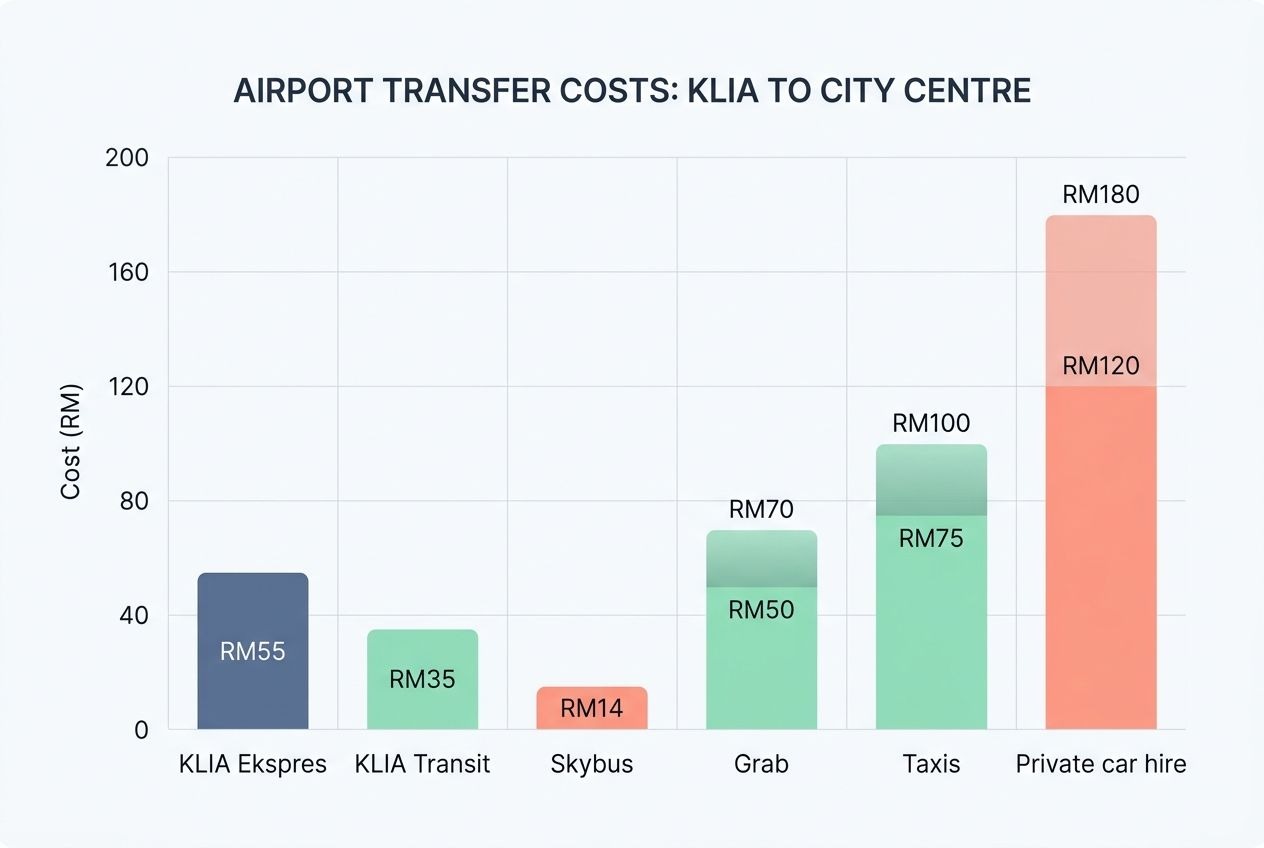
- KLIA Ekspres trains depart every 15 to 20 minutes and reach KL Sentral in 28 minutes flat. According to KLIA Ekspres’s official fare page, a one-way adult ticket costs RM55, while a return costs RM100 (saving you RM10 versus two singles). This is your fastest route into the city and works brilliantly if you travel light.
- KLIA Transit uses the same trains but stops at more stations along the route, taking roughly 37 minutes to reach KL Sentral and costing approximately RM35 return. You pay less, though the extra stops add time.
- Skybus airport shuttles run regularly day and night, collecting passengers from both terminals and dropping you at KL Sentral or selected hotels for around RM14 one way. The journey takes 60 to 90 minutes depending on traffic.
- Grab works well if you have a smartphone and local data, offering door-to-door service directly to your accommodation. Comparative traveller guides put typical airport fares at RM50 to RM70, rising with demand and traffic. You avoid dragging heavy bags through train stations.
- Our KLIA layover and transit tours suit passengers with long connections, combining airport transfers with guided city exploration without missing your onward flight.
- Taxis from the airport rank cost around RM75 to RM100 or more to central locations, though you may wait in queues and face fare negotiation at busy times.
- Private car hire through your hotel or travel agent charges premium rates, typically RM120 to RM180, but offers comfort and flexibility for groups or families with lots of luggage.
So which should you pick? The train wins on predictable speed, since it never sits in traffic. Grab often works out cheaper per person for groups of three or more travelling with luggage, as one fare covers everyone and drops you at the hotel door.
Buses and the GOKL CityBus Service
Here’s an update that catches out plenty of visitors reading older guides: the GOKL CityBus is no longer free.
According to 2026 updates on the GoKL CityBus service and DBKL route records, each ride now costs RM1, payable only via Touch ‘n Go. Cash and bank cards are not accepted, so make sure your card is loaded before you board. The good news? The network has grown from its original 4 loop lines to 15 colour-coded routes covering a much wider area, running roughly 6 AM to 11 PM on weekdays and 7 AM to 11 PM on weekends.
These routes still link key spots like the Petronas Twin Towers, Chinatown, and Bukit Nanas, making them ideal for budget-conscious travellers. At RM1 a ride, you can hop on and off all day, stop for lunch, duck into a shop, then catch the next bus without breaking the bank.
Rapid KL buses fill the gaps that the MRT and LRT networks leave behind, reaching residential areas and attractions beyond the rail lines. These buses are affordable and frequent, though they move slower than trains and their schedules can shift with traffic.
You’ll find major bus hubs linked directly to train stations, so transferring between systems takes just a few minutes. Buses work brilliantly if you’re heading somewhere off the beaten track or combining multiple neighbourhoods in one afternoon, but expect longer journey times than the rail options. Route and timetable information is available at stations and online, so you can plan ahead rather than guessing.
Walking in Kuala Lumpur
Your feet will carry you through Kuala Lumpur’s best bits, especially if you stay near Bukit Bintang or KLCC. The city centre rewards walkers with hidden eateries, narrow alleyways that maps don’t show, and local shops that tourists rarely find.
Pedestrian bridges and walkways link the major shopping malls together, making short hops between attractions easy. Well-maintained pavements run through the main tourist districts, so you can explore at your own pace.

Here’s a favourite tip we share with guests: the stretch from KLCC to Bukit Bintang covers about 1.2 kilometres through covered, air-conditioned walkways. It genuinely saves you from the heat.
A few things to keep in mind before you set off:
- Heat and humidity will test your patience, so carry water and sun protection wherever you roam.
- Pavement quality varies, so watch your step on uneven sections outside the main districts.
- Walking suits short distances and central sightseeing, but reaching outlying spots on foot will drain your energy fast.
Stick to the walkable districts and you’ll discover genuine local life without fighting traffic or waiting for transport.
Reaching the Major Attractions
Getting to Kuala Lumpur’s top sights takes a little planning, but the city’s transport links make most attractions reachable without fuss. Here are the fastest routes, and which attractions demand a different approach.

- Batu Caves sits 13 km north of the city centre and takes 30 to 45 minutes by car. Catch the KTM Komuter from KL Sentral to Batu Caves station, then climb 272 steps into the main Cathedral Cave for free entry.
- Petronas Towers stands right in the city centre, accessible via the Kelana Jaya line to KLCC station. You’ll arrive within minutes from most central locations, making this the easiest major attraction to reach.
- Merdeka Square sits close to Masjid Jamek station on the Ampang line. This historic spot is just a short walk from the platform, perfect for a quick visit between other activities.
- Genting Highlands lies 50 km north-east via the Karak Highway at 1,800 metres elevation. The journey takes roughly 90 minutes by car or Grab, and temperatures sit about 10 degrees Celsius below the city.
- Kuala Selangor sits 70 km north-west, requiring a 90-minute Grab ride or a guided tour. No rail connection serves this attraction, so transport costs add up quickly if you travel solo.
- Cameron Highlands demands a 3 to 3.5 hour drive each way. The 200 km distance makes independent travel tiring; many visitors book tours instead to avoid driving fatigue.
- Kuala Gandah Elephant Sanctuary lies 150 km north-east in Pahang, taking 2 to 2.5 hours via the Karak Expressway. Grab rates climb steeply for this journey, so a structured tour is more practical for most travellers.
- Malacca sits 150 km south on the North-South Expressway, under two hours away by car. This colonial town lacks direct rail access from Kuala Lumpur, so you’ll need Grab or a day tour.
- Ipoh stands 200 km north, roughly 2.5 to 3 hours by road. The distance makes this a full-day commitment; many visitors choose a guided tour to make the most of their time there.
All six of these sit outside the rail network – see our guide to day trips from Kuala Lumpur for what each one involves.”
When a Tour Makes More Sense Than Doing It Yourself
Public transport works brilliantly for central KL and Batu Caves, so you can absolutely handle those alone with the MRT and a Touch ‘n Go card. We’ll happily tell you when going independent is the smarter choice.

That said, several situations tip the scales toward booking a tour instead:
- You’re juggling multiple stops across the city on a tight schedule.
- You’re travelling with young children who need bathroom breaks and patience, not confusing transit maps.
- You have only a few hours in KL between flights, where a private driver-guide saves precious time and stress.
- Your destinations sit beyond the rail network, like Kuala Gandah Elephant Sanctuary or Kuala Selangor for fireflies and blue tears.
Our three-hour KL city tour starts from RM50, whilst our four-hour KL City and Batu Caves combo, available as a private tour or a small-group departure, covers both highlights without you worrying about connections or directions.
Tours also solve the language barrier and local knowledge gap that catches many visitors off guard. Your driver-guide speaks English fluently and knows which stops genuinely matter, which ones waste your time, and where the real photo opportunities hide.
You avoid missing your bus stop, misreading signage, or arriving at an attraction only to discover it closes on Tuesdays. Families with small children particularly appreciate the flexibility, air conditioning, and direct routes.
The choice comes down to this: if your trip involves multiple destinations, unfamiliar territory, or you value your time more than the modest cost difference, a tour operator like Kuala Lumpur Tours removes the friction and lets you focus on memories instead of logistics.
Conclusion
Getting around Kuala Lumpur is far simpler than you might think. Grab your Touch ‘n Go card, download the Grab app, and you’ve got the city at your fingertips.
The MRT runs smoothly, buses cover every corner, and taxis stand ready when you need them.
Your first trip might feel a little confusing, but after one or two journeys, you’ll move through KL like a local who knows exactly where to go.
Skip the stress and start exploring.
FAQs
1. How do I get around KL using the MRT and LRT?
Start by buying a Touch ‘n Go card at any station, then tap in and tap out as you travel. The MRT and LRT networks cover the city centre and suburbs like Pudu, with the Sri Petaling Line being particularly useful for getting around. Between the two systems, you can reach most areas without needing a car.
2. Does Grab work in Kuala Lumpur, or should I look for Uber?
Uber left Malaysia back in 2018, so Grab is now the main ride-hailing app here. If Grab prices surge during peak hours, try MyCar or AirAsia Ride as local alternatives.
3. What is the KL Hop On-Hop Off Bus, and is it worth it?
It’s a sightseeing coach that loops past major attractions, and you can hop off whenever you like. A 24-hour pass costs around RM45, making it a straightforward way to cover the highlights on your first day.
4. How do I reach the Kuala Lumpur Convention Centre by train?
Take the LRT to KLCC station, then follow the covered walkway for about five minutes. It sits right beside the Petronas Towers.
5. What is the KL Monorail, and where can I book transport tickets?
The monorail runs above street level and links Bukit Bintang with KL Sentral, which is handy when traffic gets heavy. Pay with your Touch ‘n Go card at the gate, or book rail passes through Trip.com.