
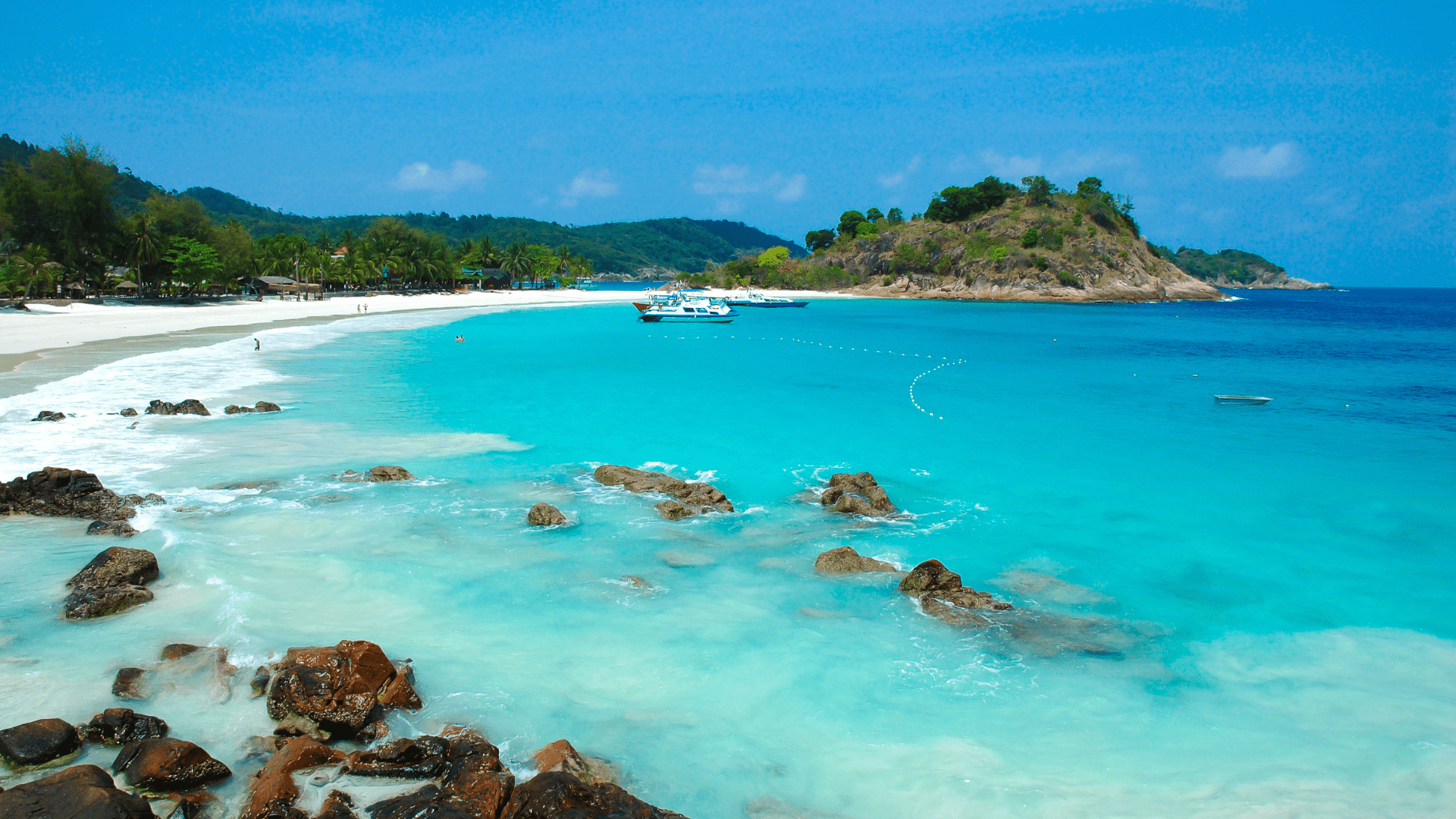
Malaysia has more than 800 islands, but the one question most visitors in Kuala Lumpur actually need answered is simpler: which island can I realistically get to from here, and how long will it take? This guide answers that first, then goes deeper on each island — travel times, ferry details, the best snorkelling, and the monsoon months that close half the country’s coastline.
Closest Islands to Kuala Lumpur — Ranked by Travel Time
Kuala Lumpur sits inland, so every island trip involves either a drive to a west-coast jetty or a short domestic flight. Here’s the honest ranking by how quickly you can actually be on sand:
| Island | Travel time from KL | How | Worth it? |
|---|---|---|---|
| Pangkor | ~4 hours | 3.5hr drive to Lumut + 30min ferry | Closest real beach island. Modest snorkelling. |
| Langkawi | ~3 hours door to door | 1hr flight from KLIA | Best all-rounder. Fastest to a top-tier island. |
| Tioman | ~6 hours | 4hr drive to Mersing + 1.5-2hr ferry | Best diving within driving distance. |
| Perhentians | ~5 hours | 50min flight to Kota Bharu + 1hr transfer + 45min speedboat | Best snorkelling in Malaysia. |
| Redang | ~5 hours | 1hr flight to Kuala Terengganu + transfer + speedboat | Best for resort-style, no-planning trips. |
| Pulau Ketam | ~1.5 hours | 45min drive to Port Klang + 30min ferry | Day trip only — stilt fishing village, no beach. |
The short answer: if you want the nearest island by road, it’s Pangkor. If you want the best island you can reach fastest, fly to Langkawi — a one-hour flight beats a four-hour drive to a lesser destination almost every time.
Is There a Beach Near Kuala Lumpur?
Not really — and it’s worth saying plainly, because a lot of visitors search for this and find vague answers. Kuala Lumpur is roughly 40 km inland. The closest coastline is Port Dickson (about 1.5 hours south), which has swimmable but unremarkable beaches popular with local weekenders rather than international travellers.
If your priority is clear water and coral, you need to commit to at least a half-day of travel. Port Dickson is a reasonable compromise for a quick escape; it is not a substitute for the east-coast marine parks.
Langkawi — The Fastest Route to a Great Island
Langkawi is an archipelago of 99 islands (104 at low tide) off the north-west coast, and it’s the most practical island holiday from KL because the flight is an hour and the infrastructure is complete — international airport, every accommodation tier, and duty-free status that makes alcohol and chocolate notably cheap.
The headline attractions are the Langkawi Cable Car, rising 708 metres to the summit of Gunung Mat Cincang, and the Sky Bridge, a 125-metre curved suspension walkway at the top. For nature, the Kilim Karst Geoforest Park mangrove tour combines limestone caves, eagle feeding and floating fish farms. Best beaches: Pantai Cenang for restaurants and nightlife, Tanjung Rhu for quiet family swimming, Datai Bay for seclusion.
Best months: November to April. Getting there: AirAsia and Malaysia Airlines fly KLIA–Langkawi several times daily, from around RM 80 one way if booked ahead.
The Perhentian Islands — Best Snorkelling in Malaysia
Two islands off the Terengganu coast inside a protected marine park, with the clearest water and healthiest coral in peninsular Malaysia. Perhentian Kecil is the backpacker island — Long Beach has cheap dorms and a lively evening scene. Perhentian Besar is quieter, with mid-range chalets in palm-fringed bays.
Snorkelling highlights include Shark Point (small, harmless blacktip reef sharks), Turtle Beach, and the coral gardens at Coral Bay. Green turtles are common. Dive shops on both islands run beginner Discover Scuba sessions and full Open Water certification.
Critical timing note: the Perhentians close from November to February for the north-east monsoon. Most chalets shut and ferries stop entirely. A December booking here will not happen.
Tioman Island — Diving Plus Rainforest
A 12 km volcanic island off the Pahang coast, surrounded by a marine park, and the most varied of the east-coast options — coral and dive sites on one side, jungle trails and waterfalls on the other. Beach areas differ sharply in character: Tekek (main village, airstrip), Air Batang and Salang (backpacker strips), Juara (quietest, reached by jungle taxi over the island’s spine).
Tioman is one of Asia’s better entry-level dive destinations — calm protected bays, reliable turtle and reef-shark sightings, and shallow coral that snorkellers can reach straight from the beach.
Best months: February to October. Getting there: 4-hour drive to Mersing, then a 1.5–2 hour ferry.
Redang — For Travellers Who Don’t Want to Plan
Redang sits in the same Terengganu marine park system as the Perhentians with comparably clear water, but a completely different model: it’s dominated by all-inclusive resorts that bundle accommodation, meals, snorkelling trips and ferry transfers into one booking. Ideal for honeymooners, families, and anyone who wants to arrive and stop making decisions.
Marine life is excellent — baby blacktip sharks patrol the shallows and green turtles are regular sightings on resort snorkelling trips.
Best months: April to October. Closed November to March.
Pangkor — The Nearest Island You Can Drive To
Pangkor is Perak’s main island, reached by a short ferry from Lumut — itself a 3.5-hour drive north from KL. That makes it the closest genuine beach island to Kuala Lumpur without flying, and a realistic weekend trip.
The island is small (about 8 km²) with an unhurried fishing-village atmosphere, budget chalets at Pantai Pasir Bogak, and the separate luxury island of Pangkor Laut Resort nearby. Be realistic about expectations: the beaches and snorkelling are pleasant but clearly below east-coast marine-park standard. You come here for the short journey and the calm, not for world-class reef.
Best months: year-round — the west coast escapes the north-east monsoon.
Best Time for Island Hopping in Malaysia
Malaysia’s two coasts have opposite weather windows, and getting this wrong is the single most common trip-planning mistake:
- East coast (Perhentians, Redang, Tioman) — open roughly March to October only. The north-east monsoon closes most resorts and ferry services from November to February.
- West coast (Langkawi, Pangkor) — year-round. Wetter spells in April–May and September–October, but the islands stay open.
- Sabah (Borneo — Tunku Abdul Rahman Park, Mabul, Sipadan) — year-round, driest February to April.
Within the open season, May to September is peak demand on the east coast. Book accommodation 6–8 weeks ahead, and further out over Malaysian school holidays and Eid.
Practical Tips Before You Book
- Check the monsoon dates first. Everything else is secondary. A December Perhentians trip simply isn’t possible.
- Bring cash. Resorts take cards; small chalets, beach warungs and ferry operators frequently don’t, and island ATMs are scarce and unreliable.
- Pack your own mask and snorkel if you’re particular — island rentals are serviceable but well-used.
- Reef-safe sunscreen matters in marine parks, and some operators now check.
- Pair the islands with KL. The most common Malaysia itinerary is 2–3 days of city sightseeing, then fly out to an island. It’s an efficient combination — the city and the coast are genuinely different experiences and the domestic flights are cheap.
Planning a KL Stopover Before Your Island Trip?
Most island-bound travellers route through Kuala Lumpur anyway, and two or three days in the city pairs naturally with a beach week. As licensed KL tour operators since 2010, we run the city side of that itinerary — Batu Caves and city highlights, KLIA layover tours for tight connections, and day trips out to the Kuala Selangor fireflies or Cameron Highlands.
We don’t operate the island ferries or resorts, so there’s nothing to sell you there — the recommendations above are simply what we’d tell a friend asking which island to pick.
Frequently Asked Questions
What is the closest island to Kuala Lumpur?
Pangkor Island in Perak is the closest genuine beach island you can reach by road — a 3.5-hour drive to Lumut, then a 30-minute ferry, so around 4 hours door to door. For a shorter trip with no overnight, Pulau Ketam (Crab Island) is just 45 minutes’ drive to Port Klang plus a 30-minute ferry, though it’s a stilted fishing village rather than a beach destination. If you’re willing to fly, Langkawi is only a 1-hour flight from KLIA and is a far better island than anything within driving range.
Is there a beach near Kuala Lumpur?
Not really. Kuala Lumpur sits about 40 km inland, and the nearest coastline is Port Dickson — roughly 1.5 hours south — which has swimmable but unremarkable beaches popular mainly with local weekenders. For clear water and coral you need to commit to at least half a day of travel to Pangkor, Langkawi or the east-coast marine parks. Port Dickson works for a quick escape; it isn’t a substitute for a real island trip.
Which island can I visit as a day trip from KL?
Realistically only Pulau Ketam (Crab Island) — 45 minutes by car to Port Klang plus a 30-minute ferry. It’s a traditional Chinese fishing village built on stilts over the water, known for seafood rather than beaches. Every other Malaysian island requires at least one overnight; Pangkor at 4 hours each way is technically possible in a very long day but not enjoyable.
What is the best island in Malaysia for snorkelling?
The Perhentian Islands and Redang, both in the Terengganu marine park system, have the clearest water and healthiest coral in peninsular Malaysia — reliable green turtle sightings and harmless blacktip reef sharks in the shallows. Tioman is the next best and the most accessible by road. All three are east-coast islands, open roughly March to October only.
What is the best island in Malaysia for first-time visitors?
Langkawi. It has an international airport, English is widely spoken, accommodation runs from hostels to five-star resorts, it operates year-round, and the cable car, Sky Bridge and mangrove tours give you plenty to do beyond the beach. It’s the lowest-planning-effort option and suits couples, families and solo travellers equally.
When is the best time to visit Malaysia’s islands?
It depends entirely on the coast, and getting this wrong is the most common planning mistake. East-coast islands (Perhentian, Redang, Tioman) are open roughly March to October — the north-east monsoon closes most resorts and ferries from November to February. West-coast islands (Langkawi, Pangkor) run year-round. Sabah’s Borneo islands are year-round, driest February to April.
How do I get to Langkawi from Kuala Lumpur?
Fly. AirAsia and Malaysia Airlines run KLIA to Langkawi International Airport several times daily, taking about an hour, with one-way fares typically RM 80–250 booked in advance. The alternative — driving 5+ hours north to Kuala Kedah then taking a 1.5-hour ferry — is almost always slower and no cheaper.
What’s the difference between Perhentian Kecil and Perhentian Besar?
Perhentian Kecil (“Small”) is the backpacker island — Long Beach has cheap dorms, beach bars and a young crowd. Perhentian Besar (“Big”) is quieter and more family-oriented, with mid-range chalets tucked into palm-fringed bays. Both sit in the same marine park with the same excellent snorkelling, and a short water taxi connects them, so you can stay on one and visit the other.
Can I combine a Kuala Lumpur trip with an island holiday?
Yes, and it’s the most common Malaysia itinerary. The usual shape: fly into KL, spend 2–3 days on city sightseeing and day trips, then take a cheap domestic flight to Langkawi or transfer east for the marine-park islands — 6 to 8 days total. We run the KL portion (city tours, Batu Caves, Cameron Highlands, the Kuala Selangor fireflies) and can time it around your onward island flight.